

What is Estate Liquidation Planning?
Estate liquidation planning is beneficial for Montana residents who need to manage and sell assets after a loved one’s passing. This process involves assessing the value of assets, organizing sales, and handling legal requirements.
Caring for your and your family’s well-being is the priority. If a little proactive planning can make the mourning period less stressful, then it was worth it.
For sound legal advice about estate liquidation planning, Montana Elder Law is a dedicated resource for estate planning in Montana.
Key takeaways:
- Transparent process: Document every step for clarity and accountability.
- Professional appraisals: Accurate asset valuation is critical.
- Legal considerations: Understand Montana’s specific estate laws.
- Effective advertising: Use strategic methods to attract buyers.
- Post-sale actions: Plan for the disposal of unsold items.
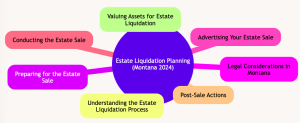
Understanding the Estate Liquidation Process
Estate liquidation begins with detailed planning and proceeds through several stages until the final sale of assets. Here’s a clear outline:
The Estate Liquidation Process in Detail
| Step | Description | Timeline | Actions Required |
| Initial Planning | Assess assets, gather documentation | 1-2 weeks | List all assets, collect necessary paperwork |
| Legal Filings | File petitions and notify heirs | 2-4 weeks | Submit documents to probate court |
| Professional Appraisals | Valuate all significant assets | 1-2 weeks | Hire certified appraisers |
| Preparation for Sale | Organize and prepare items for sale | 2-3 weeks | Clean, repair, and price items |
| Advertising | Market the estate sale | 1-2 weeks before sale | Use online and offline channels |
| Conducting the Sale | Execute the sale event | 1-2 days | Host the sale, manage transactions |
| Post-Sale Actions | Handle unsold items | 1-2 weeks after sale | Donate, auction, or recycle remaining items |
Valuing Assets for Estate Liquidation
Importance of Professional Appraisals
Professional appraisals play a key role in estate liquidation. They provide an accurate value for your assets, ensuring fair pricing.
Appraisers know how to assess various items, from real estate to personal property. Their expertise helps avoid undervaluing or overpricing, which can impact the sale’s success.
Hiring an appraiser gives you confidence in the value of your estate items.
Types of Assets
Different types of assets require distinct approaches in valuation.
- Real Estate: This includes homes, land, and commercial properties. Real estate tends to have a significant impact on the overall value of an estate.
- Personal Property: Items such as vehicles, jewelry, art, and collectibles fall under this category. Each type requires a specific method of appraisal.
- Financial Assets: Stocks, bonds, and bank accounts are financial assets that need careful valuation. These assets often have fluctuating values, necessitating current market assessments.
Methods of Valuation
There are several methods to value assets:
- Market Value: This approach determines how much an asset would sell for in the current market. It’s widely used for real estate and personal property.
- Replacement Cost: This method assesses how much it would cost to replace an item with a similar one. It’s often used for insurance purposes.
- Income Approach: This valuation is based on the income an asset generates. It’s commonly used for investment properties and businesses.
Preparing for the Estate Sale
Preparing for an estate sale involves several critical steps.
First, organize all items, categorizing them for easy identification.
Then, clean and, if necessary, make minor repairs to enhance the appeal of items.
Proper preparation helps in attracting buyers and achieving better prices.
Key Preparation Tips:
- Categorize Items: Group similar items together for easier management.
- Label Prices: Clearly mark prices to avoid confusion during the sale.
- Set Up Sale Area: Arrange items in a way that’s accessible and visually appealing to buyers.
Legal Considerations in Montana
Understanding the legal requirements in Montana is essential for a smooth estate liquidation process.
Montana has specific legal requirements for estate liquidation.
You must file necessary documentation, such as the will and death certificate, with the probate court. The court oversees the process to ensure all legal obligations are met. Additionally, executors must notify heirs and creditors, providing transparency and fairness.
Privacy concerns are significant during estate liquidation. While probate records are public, sensitive information like social security numbers and minor children’s details are protected.
Certain records can be sealed under specific conditions, such as protecting confidential business information. Knowing what can be disclosed helps balance transparency with privacy. (1)
Advertising Your Estate Sale
Effective advertising is key to a successful estate sale.
It’s all about reaching the right audience and generating interest. Start by creating compelling listings that highlight your best items.
Use high-quality photos and clear descriptions to attract potential buyers. Spread the word through various channels to maximize visibility.
Steps to Advertise Effectively:
- Online Listings: Post your sale on popular platforms like Craigslist, Facebook Marketplace, and estate sale websites.
- Local Newspapers: Place ads in community newspapers to reach a broader audience.
- Social Media: Use platforms like Facebook, Instagram, and Twitter to share details and photos.
- Community Boards: Put up flyers on bulletin boards in local businesses, libraries, and community centers.
- Email Newsletters: Send announcements to your email list if you have one, or partner with local groups to spread the word.
Conducting the Estate Sale
On the day of the sale, efficient management is necessary.
Arrange items neatly, label everything clearly, and be prepared for a busy day.
Good organization helps in managing crowds and transactions smoothly.
Payment Methods Comparison
| Payment Method | Pros | Cons |
| Cash | Immediate, no transaction fees | Handling large amounts can be risky |
| Credit | Convenient for buyers, potentially higher sales | Transaction fees, requires a card reader |
| Online Payments | Safe and trackable, expands payment options | Fees, may require setup and internet |
Post-Sale Actions
After the estate sale, you might have items left unsold. Decide on the best course of action to handle these items efficiently. Consider each item’s value and potential use when choosing the next step.
Options for Unsold Items and Their Benefits:
- Donations: Give items to charities. Benefits include potential tax deductions and helping the community.
- Auctions: Sell valuable items at auctions. This can sometimes fetch higher prices than estate sales.
- Recycling: Recycle items that are not sellable or donatable. It’s an eco-friendly option to dispose of unwanted items.
Estate Liquidation Planning with Montana Elder Law
Estate liquidation planning involves careful preparation and strategic execution. From valuing assets to advertising the sale and handling unsold items, each step requires attention to detail. Professional assistance can make this process smoother and more effective.
Montana Elder Law offers expert guidance to plan for estate liquidation efficiently.
Our experience and dedication to the community make them a reliable partner in managing estate matters. Trust Montana Elder Law to give you the attention and expert legal services you need.
Reference:
(1) Ashford.com, Conducting Estate Sales (Liquidations), https://www.asheford.com/conduct-estate-sales.html